Key takeaways
- The night train is the best way to travel between Beijing and Hong Kong. It is a superior flying experience.
- Daytime train offers views while the night train offers sleep on the go, and as a bonus, you save money on a hotel.
- The room is quite noisy, so earplugs or noise-cancellation headphones will help you to have a great sleep.
- Arrive at the station at least 90 minutes (+ 10 extra minutes)
- It doesn’t have a shower facility on the train.
- No solo occupancy!
Intro
I have already travelled on a few high-speed trains in China. I didn’t manage to travel on a night train until now.
I spoke to my wife a few (too many) times about taking the night train in China. We figured out there’s a possibility during our trip to Hong Kong.
We decided to fly there and take the night train back, as it was the most time-efficient option and allowed me compare flying domestically to taking the train.
Booking
I didn’t book a ticket for this, as it’s a bit more complicated for foreigners so that the best option will be trip.com (not sponsored, don’t panic).
Journey
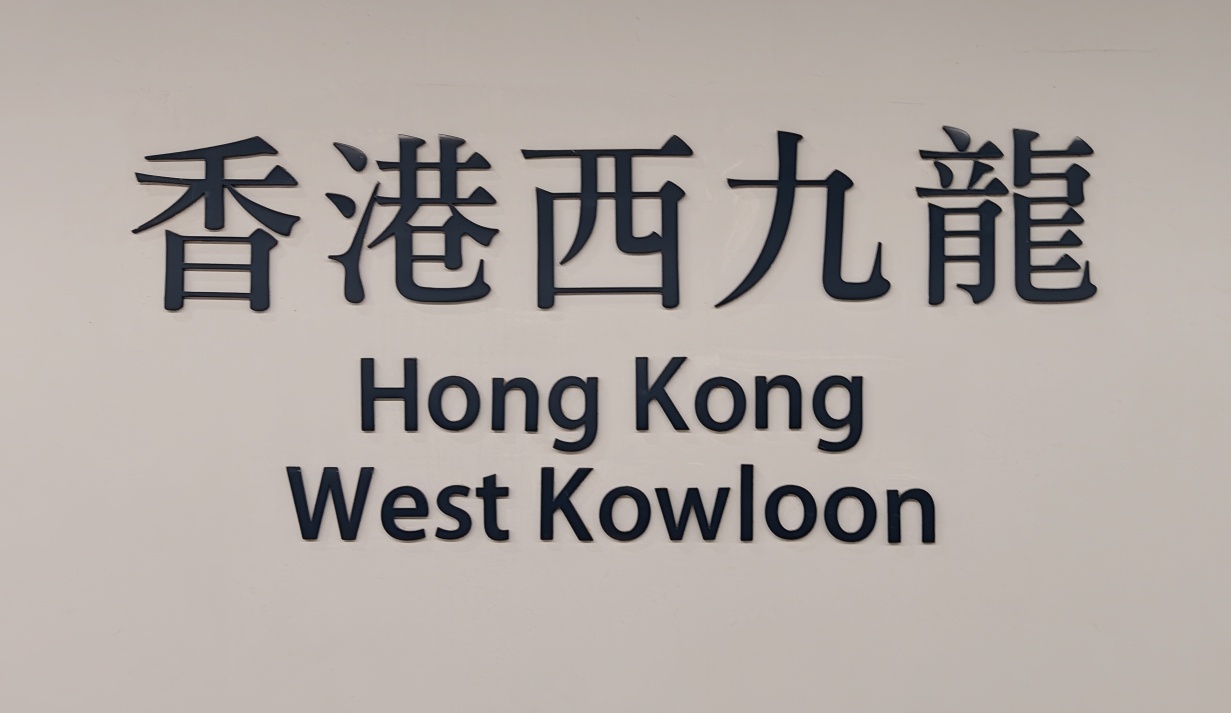
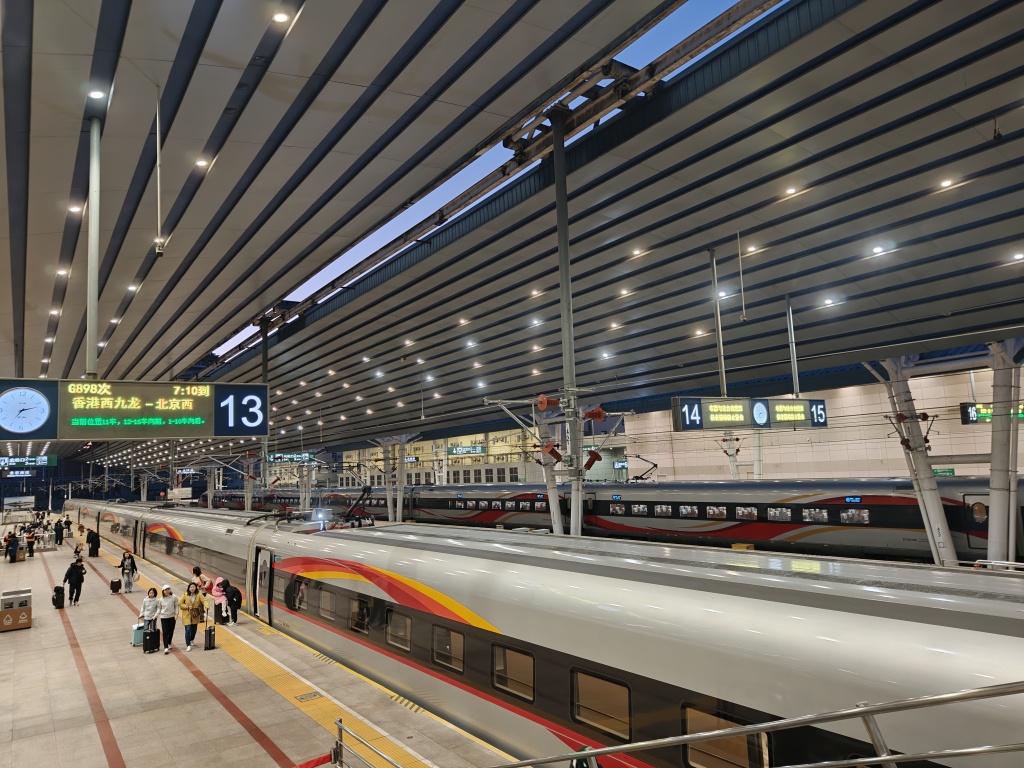
I travelled from Hong Kong West Kowloon to BeijingXi (West) knowns as G898.
It is a good idea to arrive about 100 minutes before departure, as you will need to go through various checks (the same as at the airport).
It is also a long walk from the metro to the station between every check.
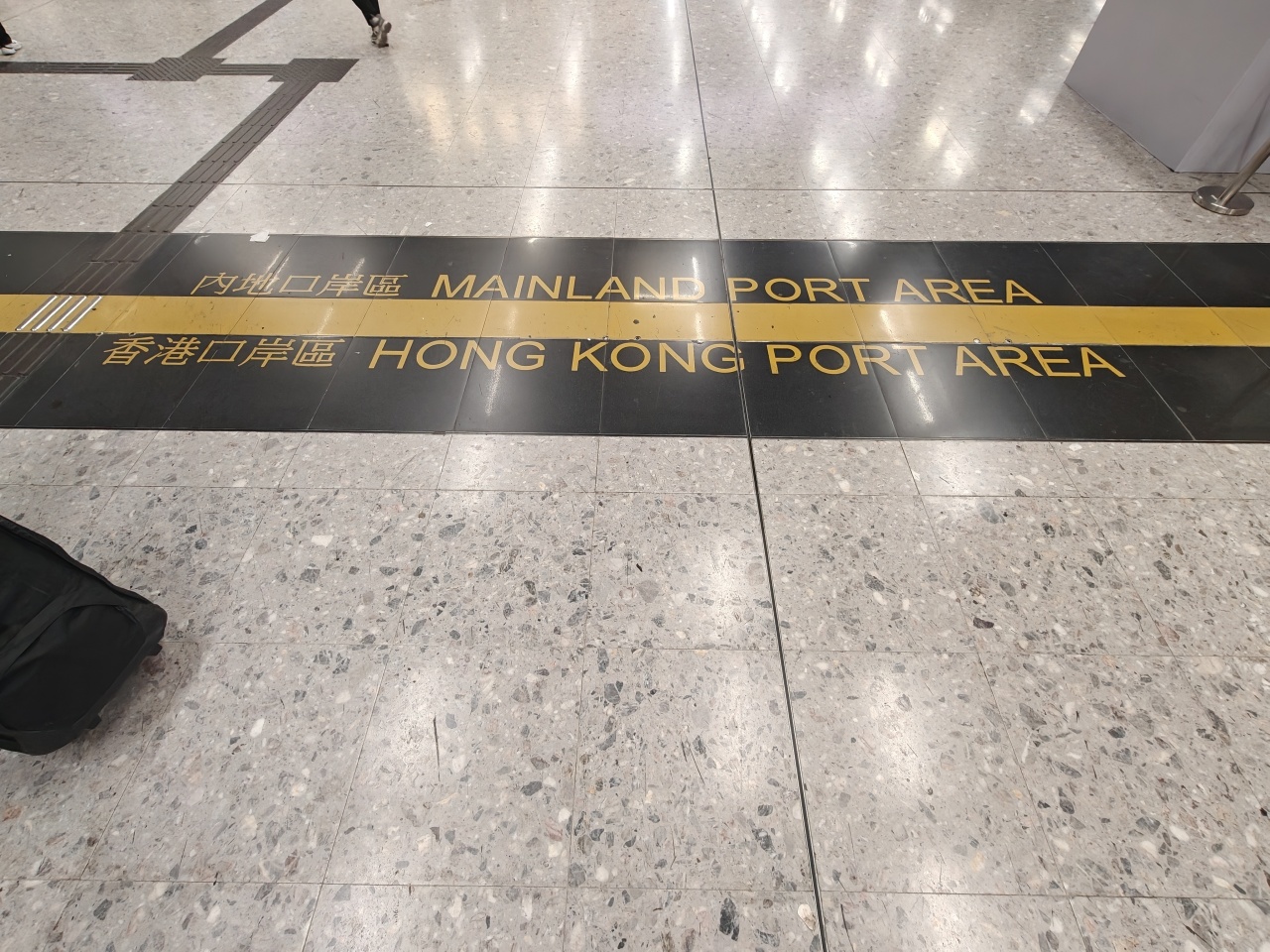
I guess they want you to stay fit, which is good, but it is a very different experience from Europe, where you can turn up and be on the train in 15 minutes (except Eurostar), so keep this in mind.
The station signage is a bit confusing, but you should be able to follow without major issues.
One important note: buy your food and drink before you get to the station. Choices at the station before the entrance are limited. It is a bit better at duty-free shops, but there was nothing in the waiting area (we may have missed it due to sign issues and the size of the station).
After endless walking through various checks, we arrived at the waiting area.
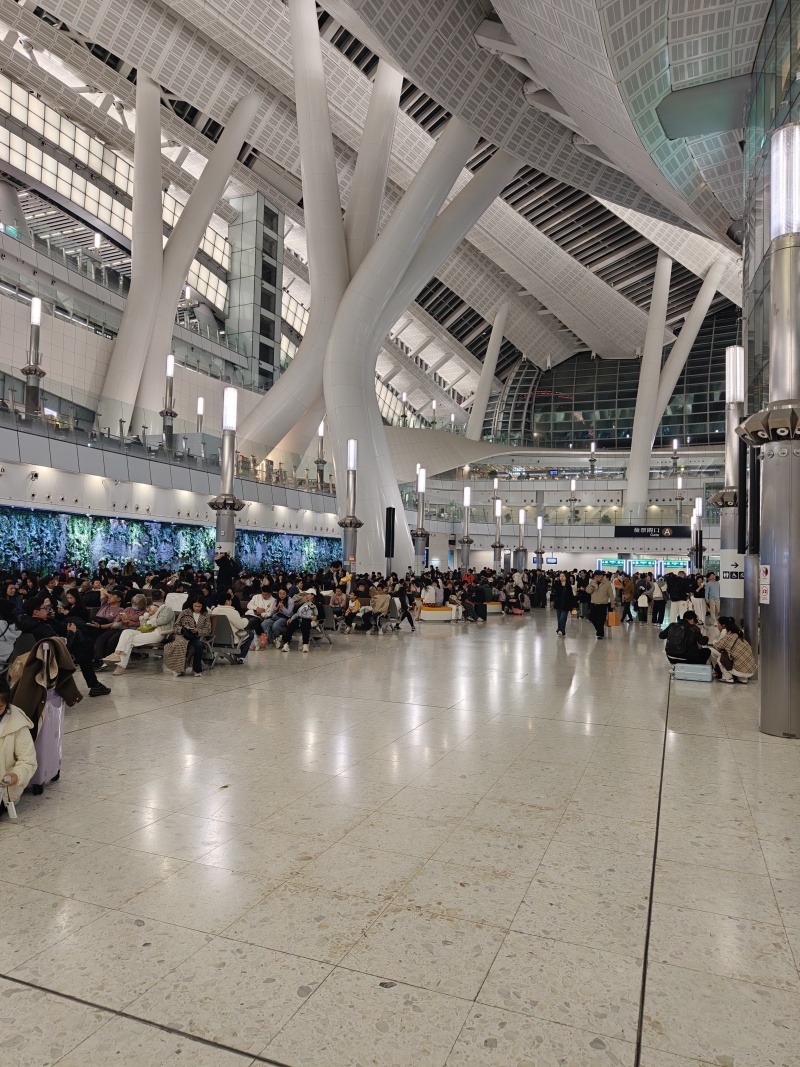
Our ticket didn’t specify which gate we should board (5A, 5B, 6A, or 6B), but given our coach number, I guessed it would be the B gates, and I was right. It is not an issue, but keep in mind that these trains are more than 400 meters long, so if you choose the wrong one, you will reward yourself with a longer walk (but you have around 15 minutes to get to the train).
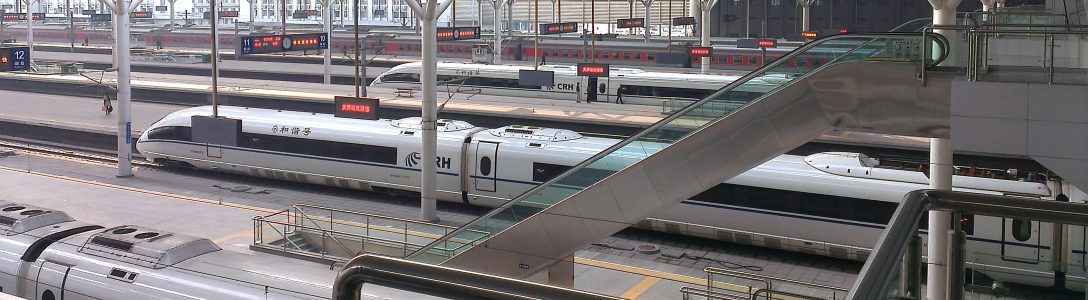
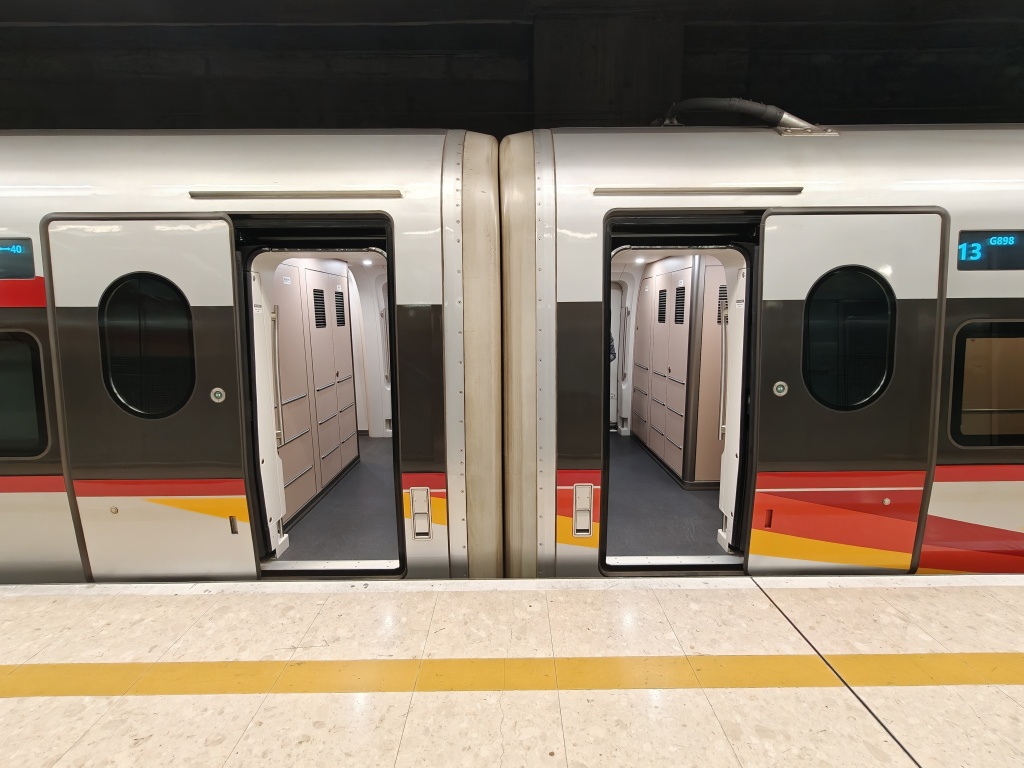
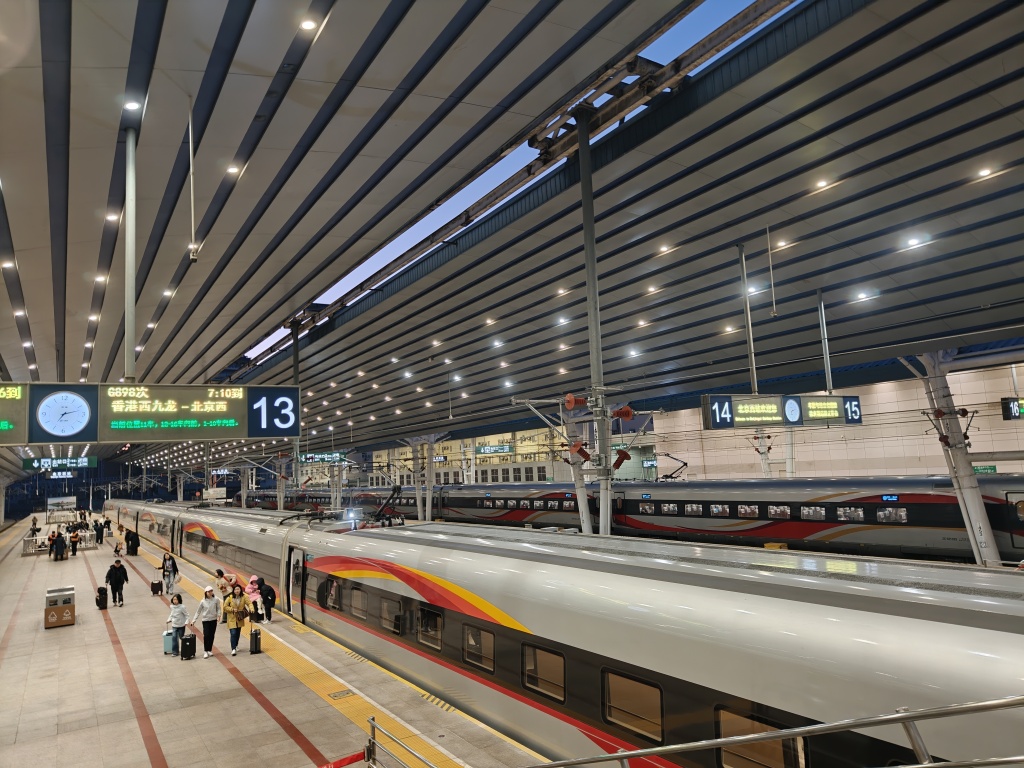
I was wondering if the train would look any different from a typical Fuxing, and sadly, it seems like an ordinary train from the outside, without any unique branding.
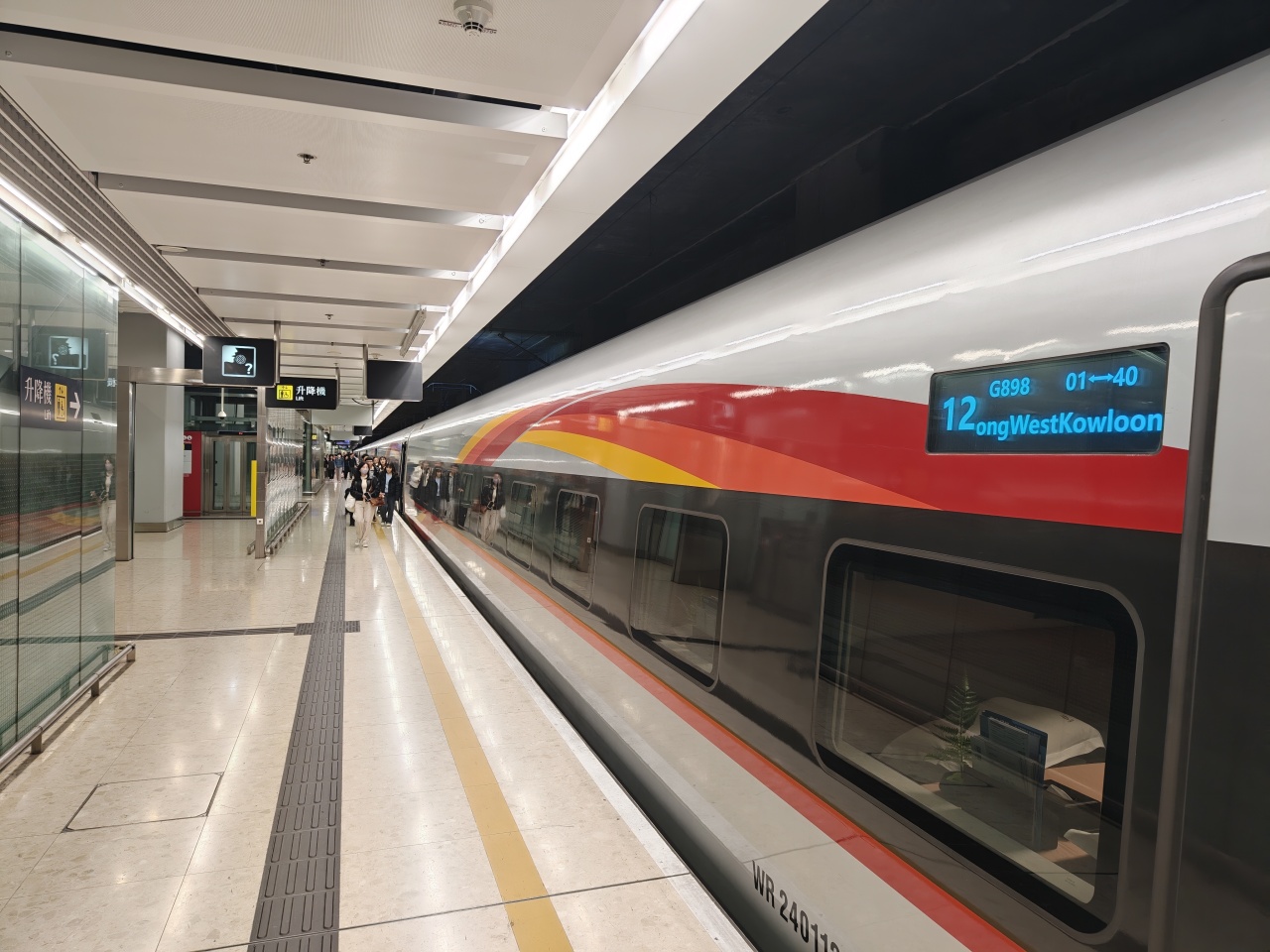
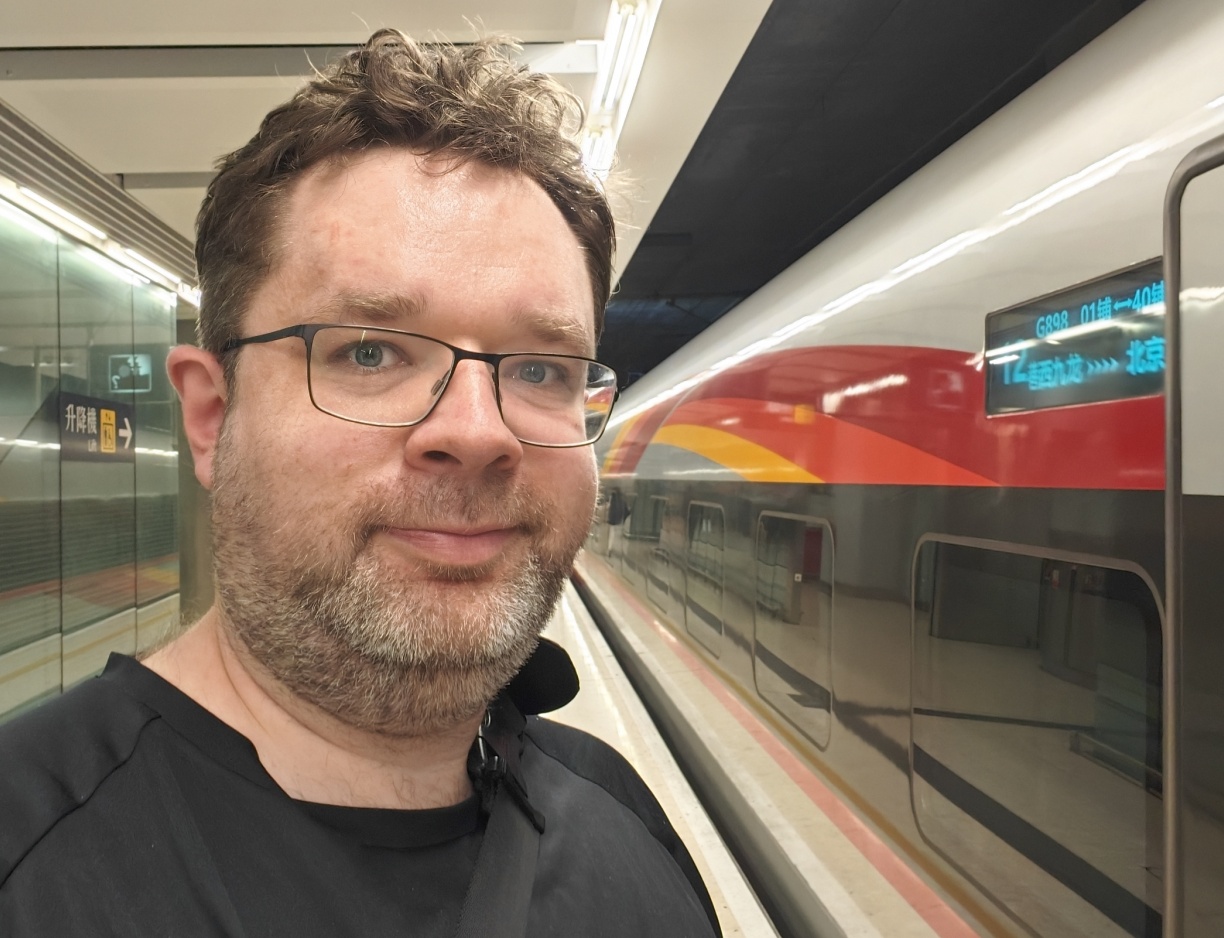
The first impression is that the train is very long and has a cool livery with a red-yellow wave running through it.
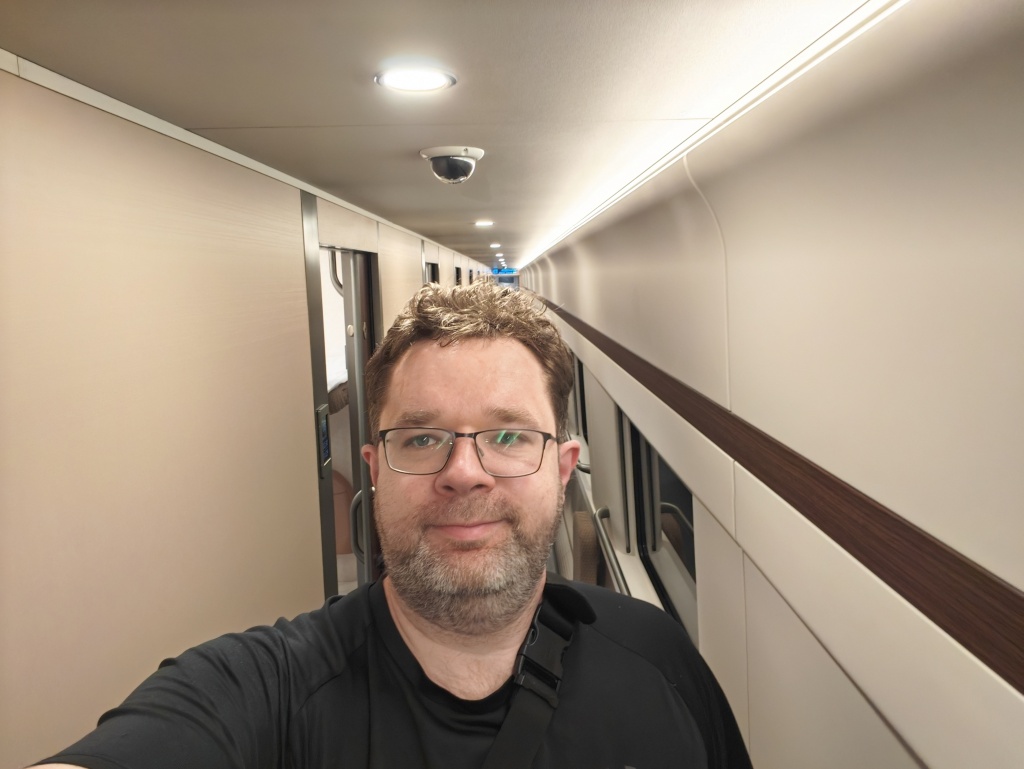
Inside, corridors are wide so that I could pass through other relatively large citizens, something that is not possible on the Caledonian Sleeper, for example.
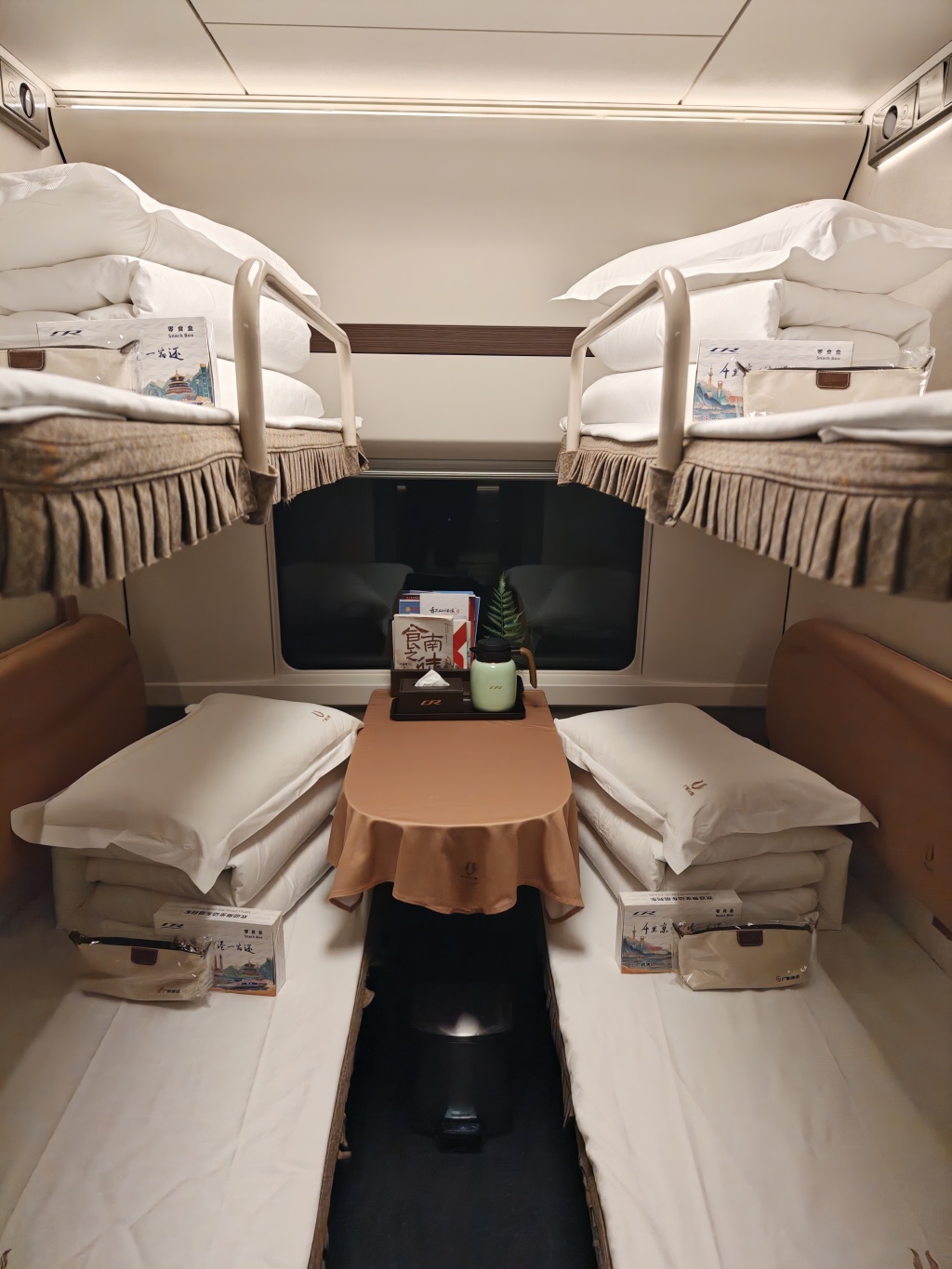
There are 12 compartments with 4 beds each. More about it later.
I sat in the room and waited for the train to depart.
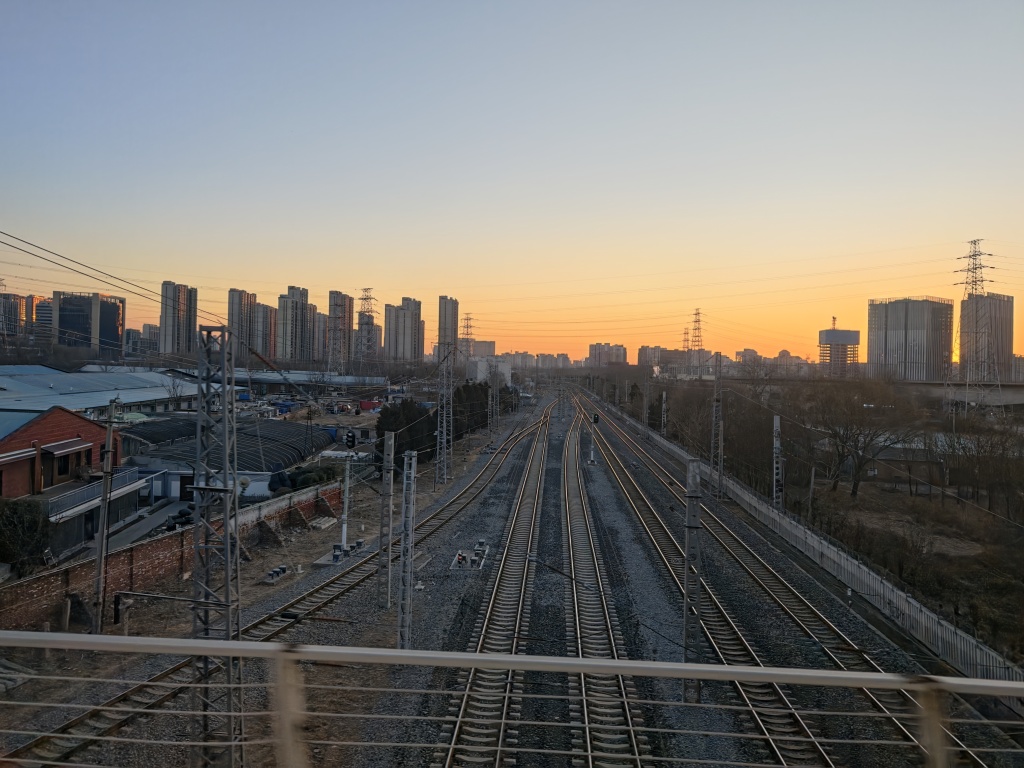
We departed and were in a tunnel until Shenzhen, where we stopped, then in Guangzhou, and at 23.30 in Changsha. You cruise through the night until 5.32, when you stop in Shijiazhuang, before arriving in Beijing at 6.53. We arrived 15 minutes late, which was great because we were rewarded with stunning sunset views in Beijing.
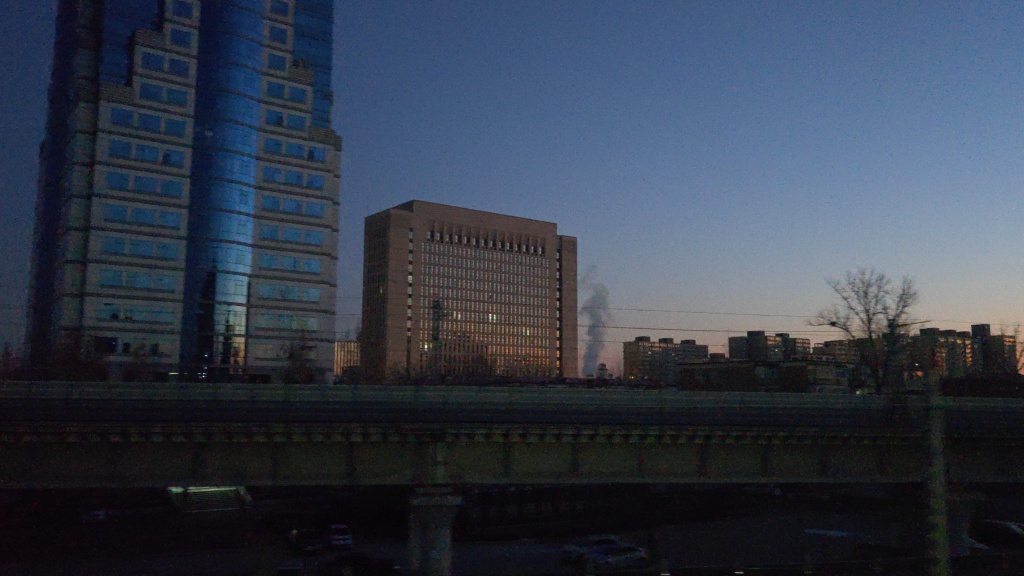


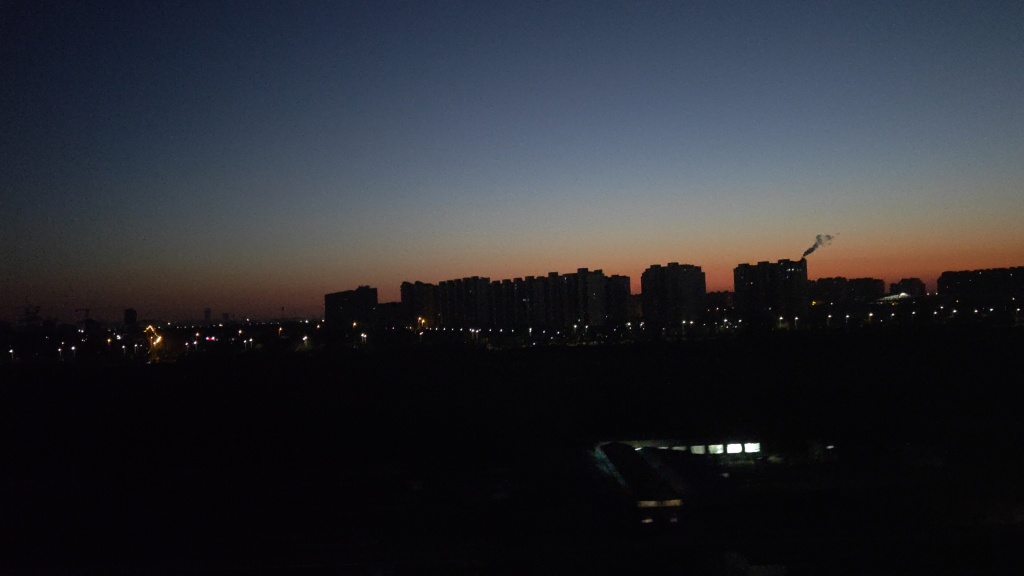
One note: the train attendant will wake you up about 20 minutes before departure. Something I like about the Caledonian sleeper is that you can stay in the coach for a bit before you need to leave.
The ride itself was very smooth, and you didn’t feel too many bumps, but you could hear a lot of noise.
Some of them are white noises that don’t prevent you from sleeping, but there were quite a few types of noises when the train is at a very high speed that will prevent you from sleeping, but luckily Bose Anti-Noise Headphones cancelled them out very well and allowed for great sleep. I don’t know if it’s our room-specific or if it’s a “normal” feature. For the rest of the family, my snoring was a noise that prevented them from sleeping, not train noise, which is why I prefer the solo-occupancy option, which sadly is not available on these trains. It was an outstanding experience for me.
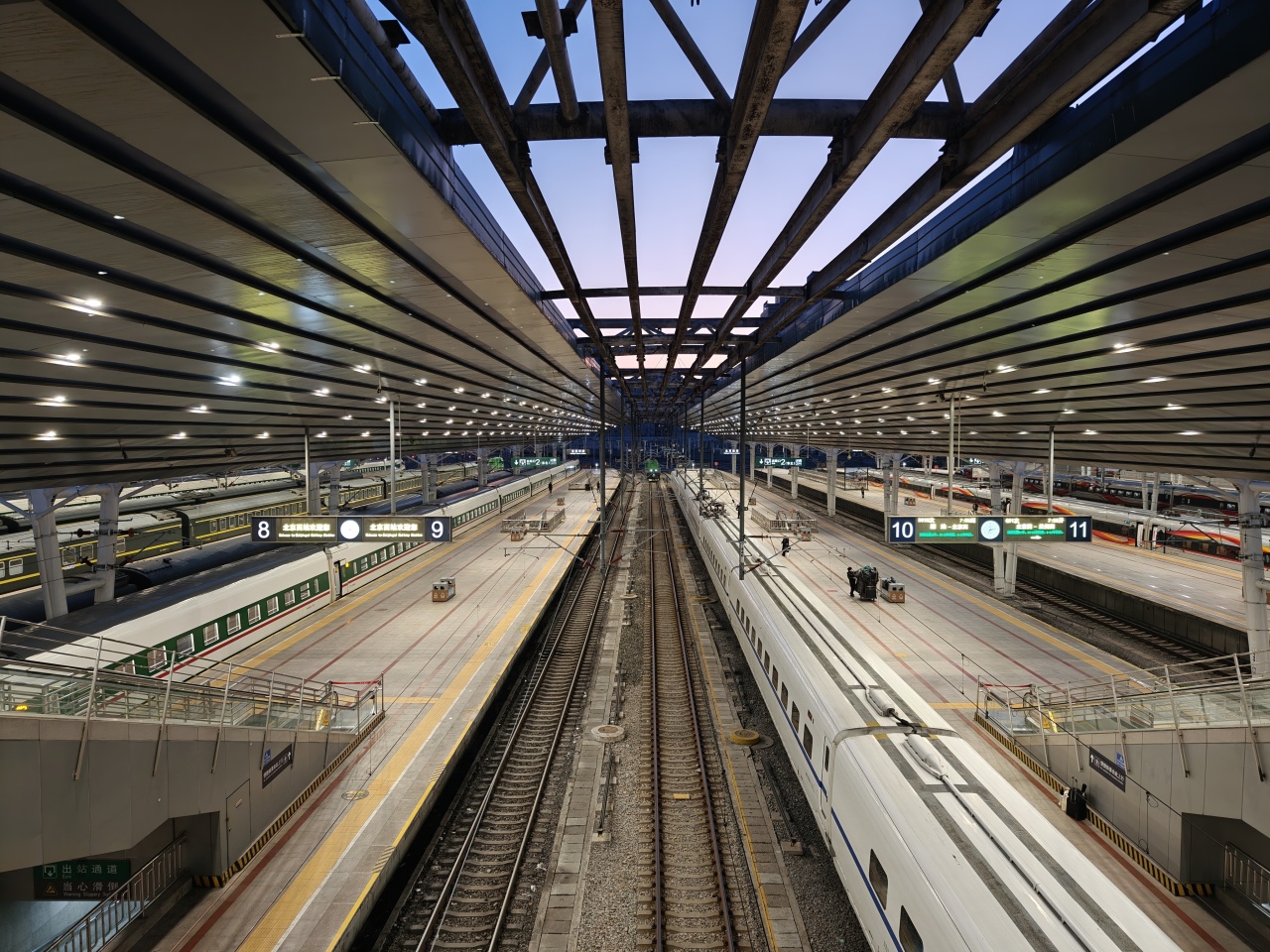
Our trip didn’t stop there as we needed to transfer to another train. Our train arrived at platform 13 and departed from platform 17. This 2-minute change took 15 minutes. The problem is that in China, you can’t just go from platform 13 to 17. You need to use an “Express Transfer,” which goes upstairs, then exit via platform 1 (as others were closed), then go to waiting room 10 to go through the ticket check gate to Platform 17. This is because your ID and tickets need to be checked constantly.
Room
We were in a Soft Sleeper Coach.
It has 4-bed room constists of 2 bunk beds.
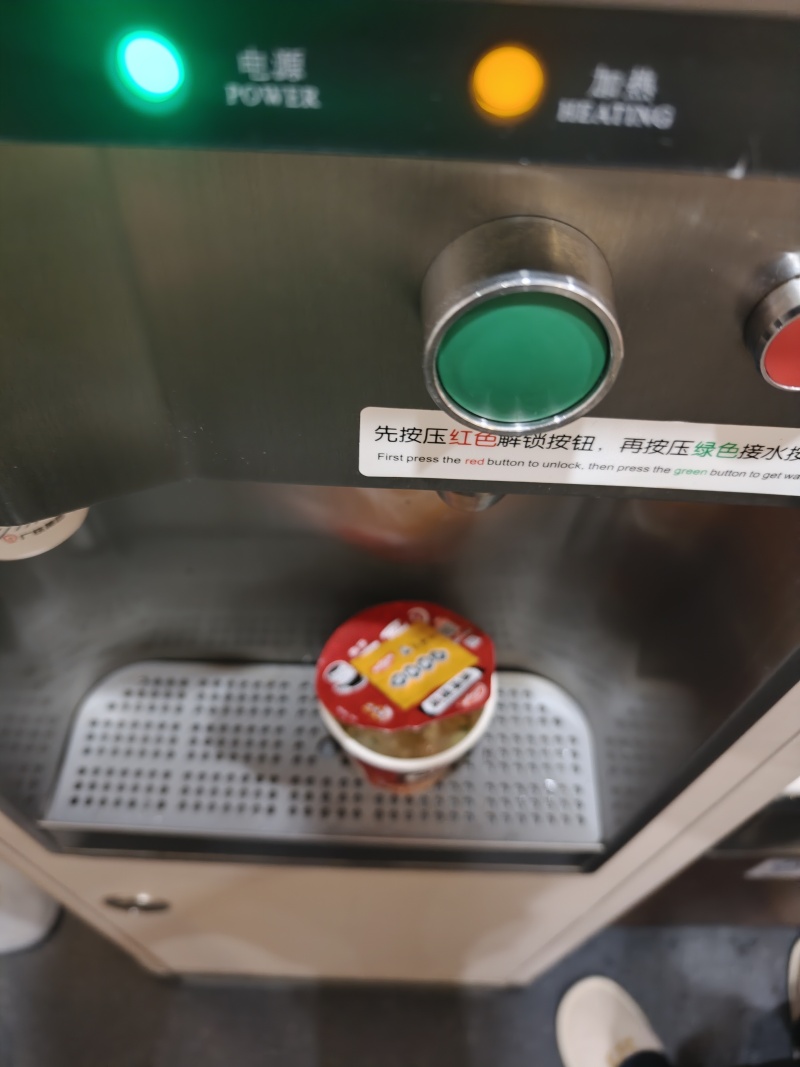
It has a table with a kettle.
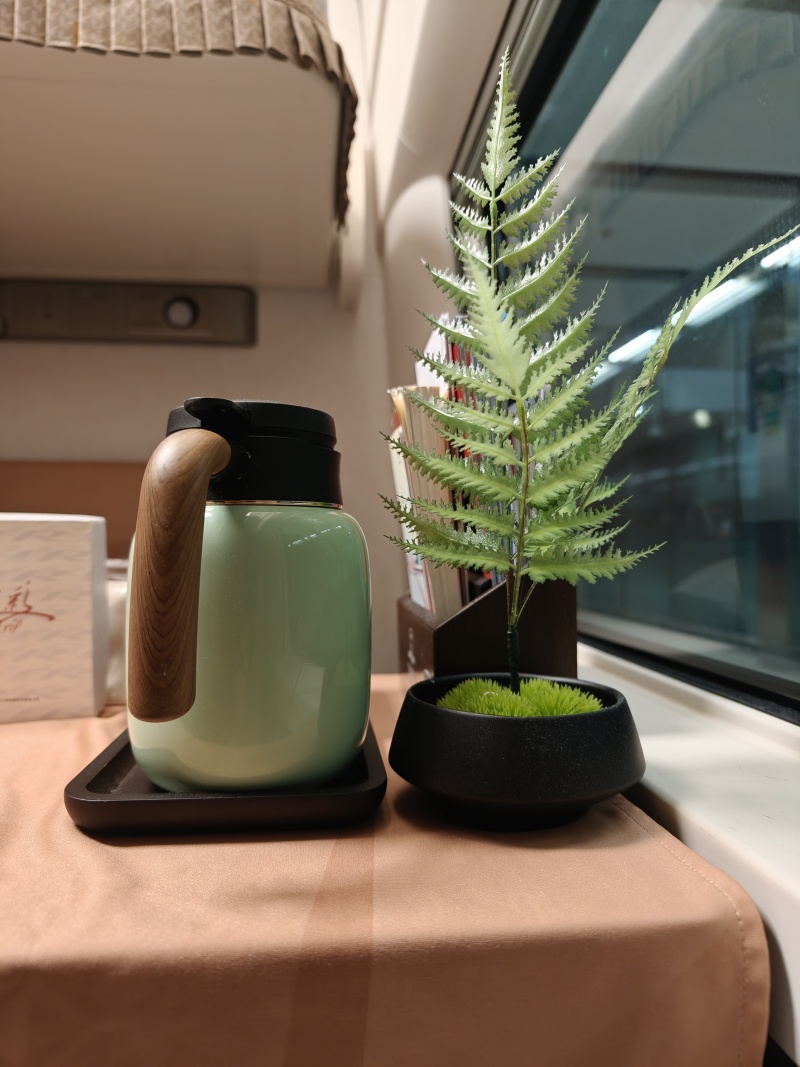
Each bed has access to its own power socket with a USB port (not really usable).
Unfortunately, there is no way to control the temperature, so it was very toasty for me.
Lighting is very bright, including a night light. I expected the night train to be much more subtle, as it affects your eyes and sleep.
Overall, pretty good, but it feels quite crowded to me, but if you are Asian, it will feel normal to you.
Bed
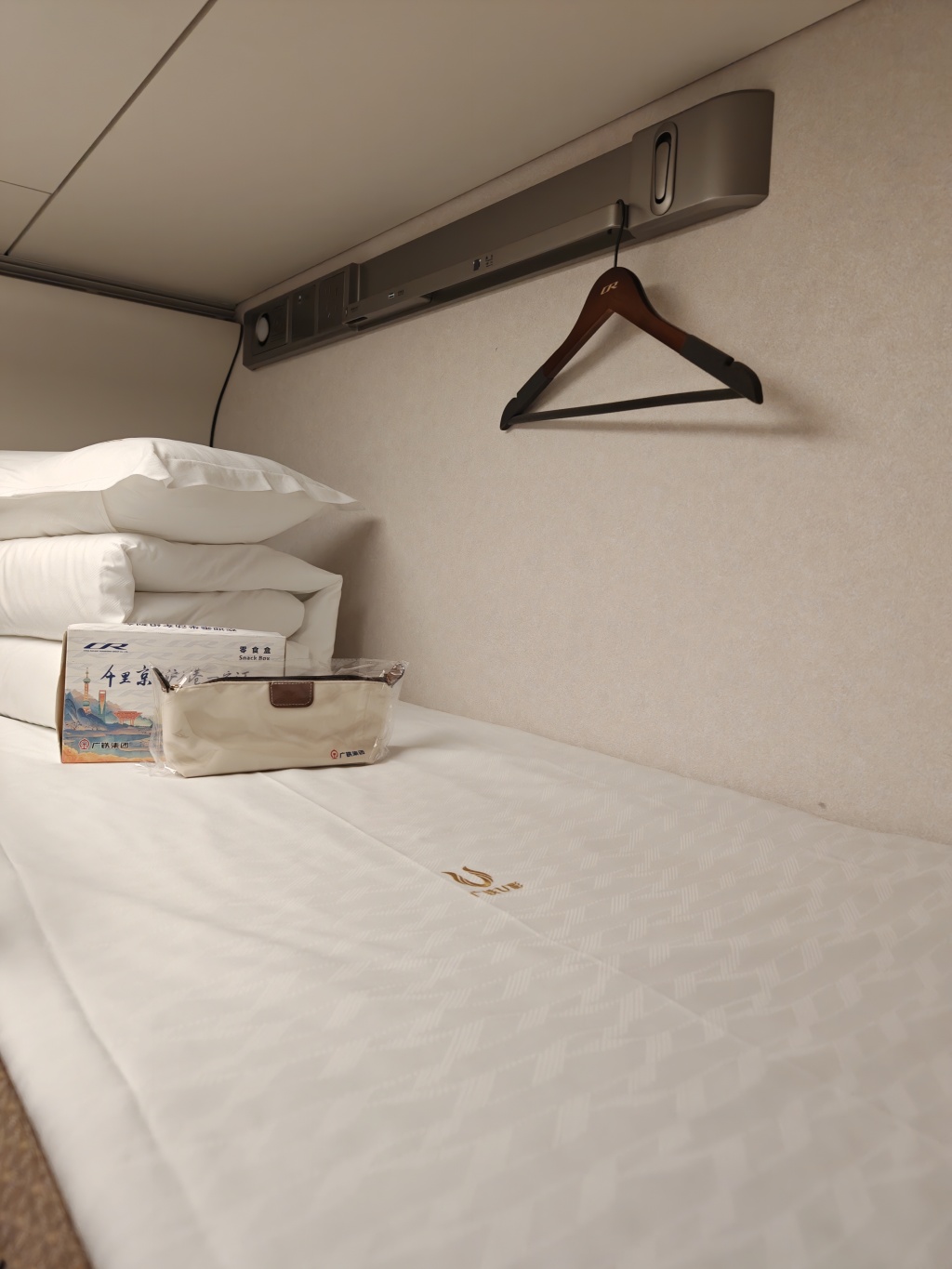
- The bed was great, big enough to accommodate a very fat guy like me. Size is 220/225cm in length and 790/950cm.
- They include very comfy pillows and a duvet.
- I had a great but short sleep, as it takes me ages to fall asleep due to the high room temperature and stomach problems I was experiencing that day. Another extraordinary experience I had was waking up a few times during sleep, which is normal for me. What was weird was that my consciousness returned without the ability to move my body for a few seconds, and then I could move again. I did experience something like that in the past, but never a few times during one sleep.
- On your bed, you will find lots of cool stuff: an amenity kit, disposable slippers and a snackbox.
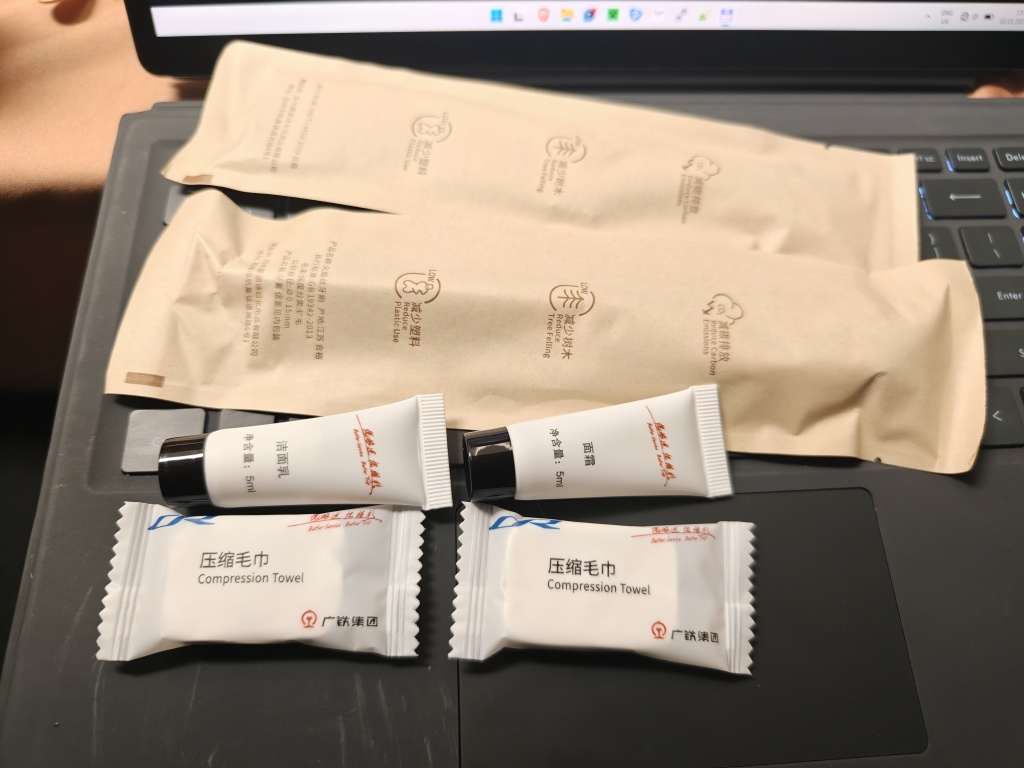
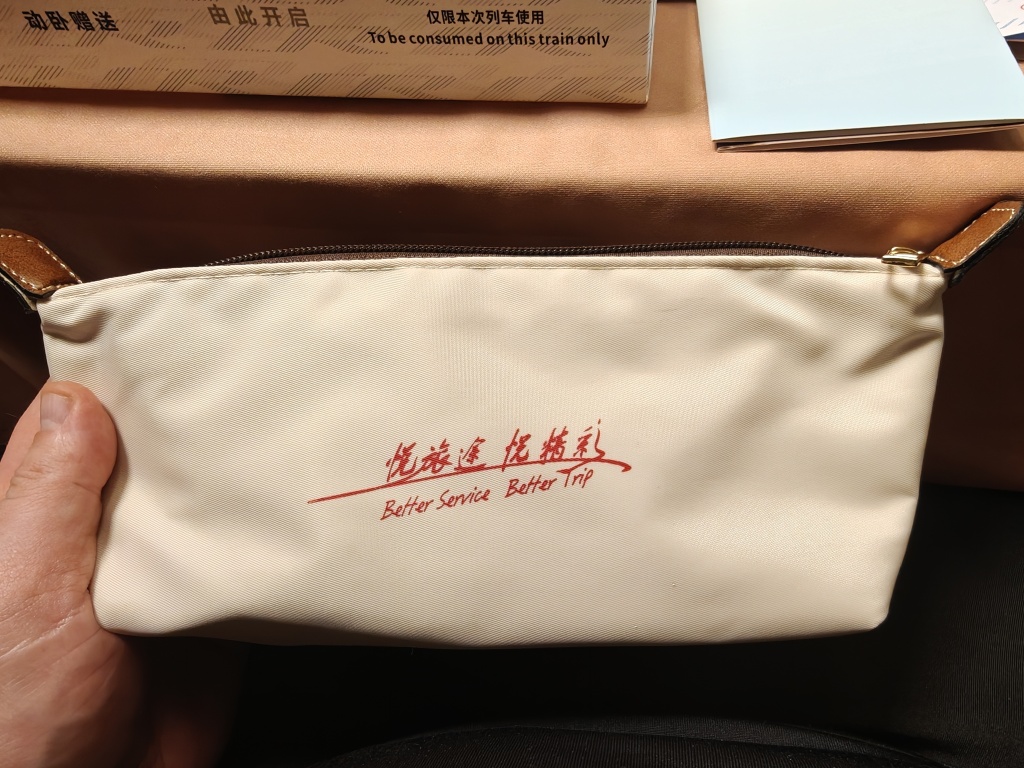
Amenity kit
Yes, it comes with a reusable bag!
Inside, you can find that it comes with 2 compressed towels,
Pretty much everything you need for the trip, except an eye mask.
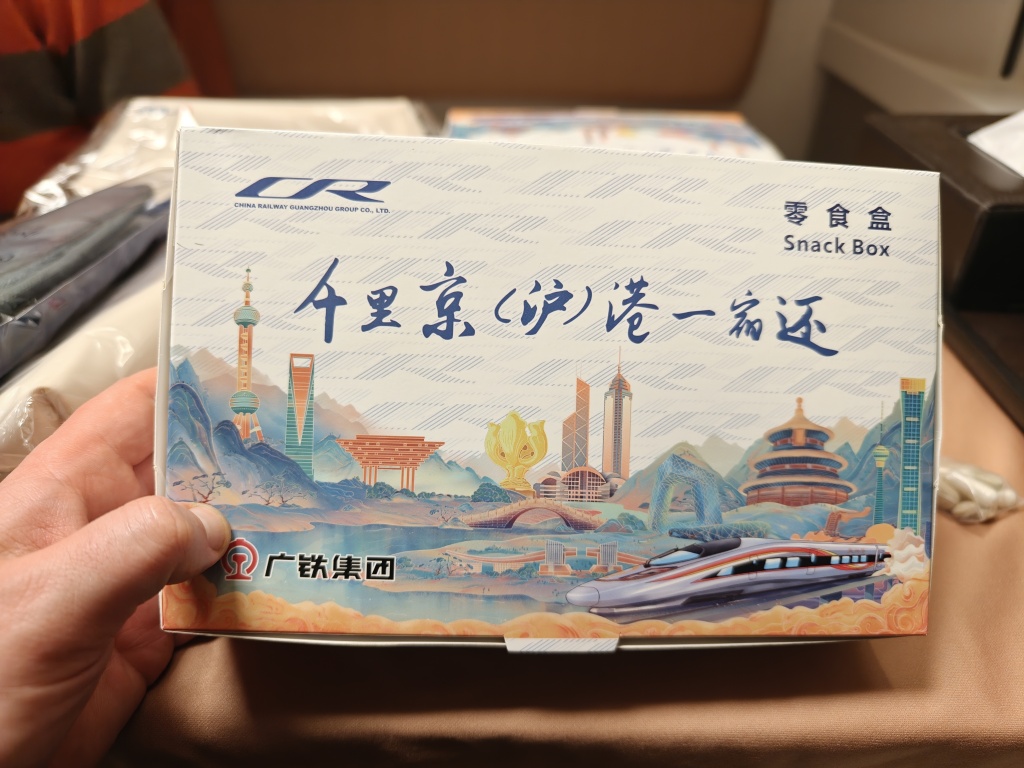
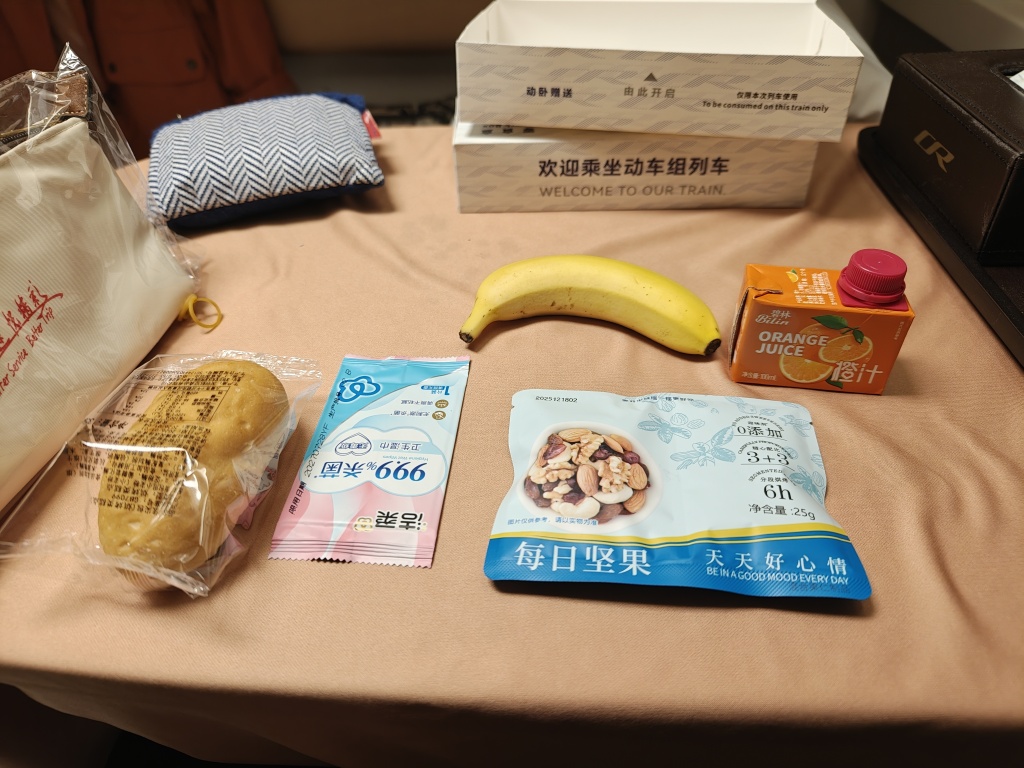
Snack box
It has banana, orange juice, plastic bun and nuts.
I was hoping for a bit more, but I can’t complain about any freebies.
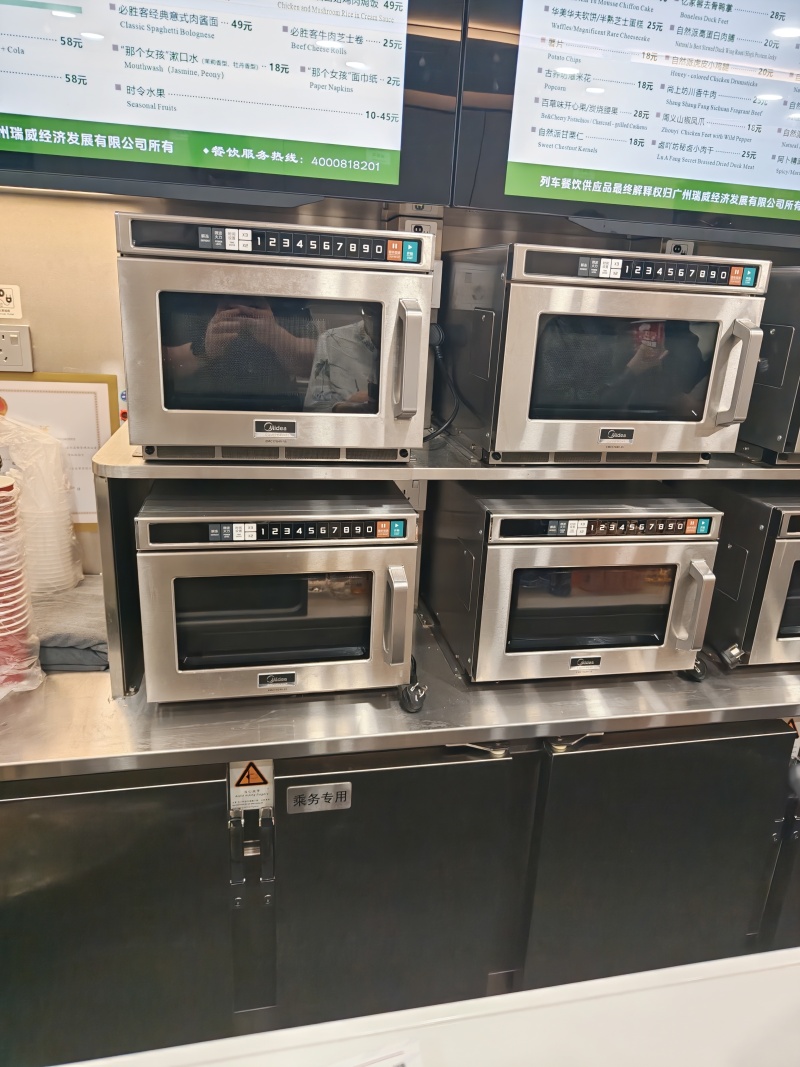
There is a shop on the train where you can buy food from a pretty big menu. The shop is small; it has a few seats where you can eat, occupied by people working on their laptops.
Tips and tricks
- A few things about visas: you need a visa to China (however, they offer some visa-free options for citizens of a few countries), and you usually don’t need a visa to Hong Kong. However, if you travel from China to Hong Kong and back, make sure you have a multiple-entry visa!
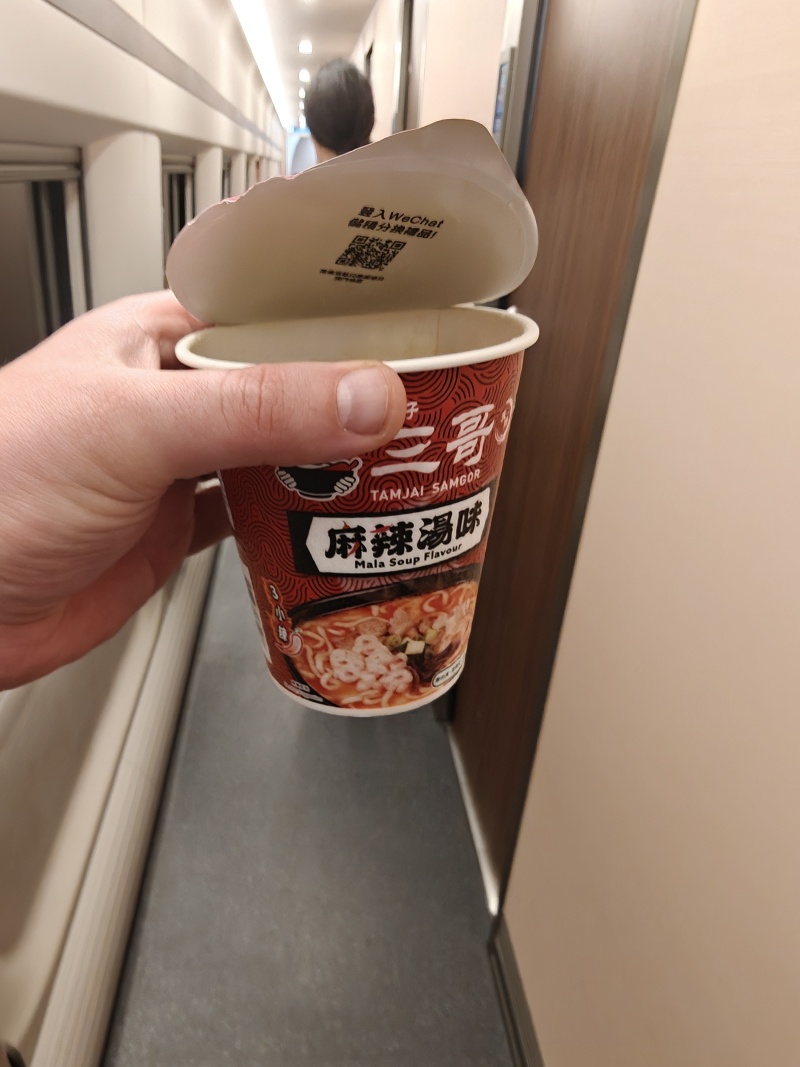
- Buy food before going to the station, and if you want, looks like local buy some noodles 😀
- Noise-cancellation headphones will make your sleep great.

Nerdy stuff about the train
The train is a Fuxing CR400AF-AE variant.
It entered into service in September 2024.
Like others in this series, it is designed to travel at a maximum speed of 400 km/h, but its service speed is 350 km/h. However, the fastest speed you can hit will be 340km on some sections.
On our trip, I saw speeds between 275 and 340 km/h.
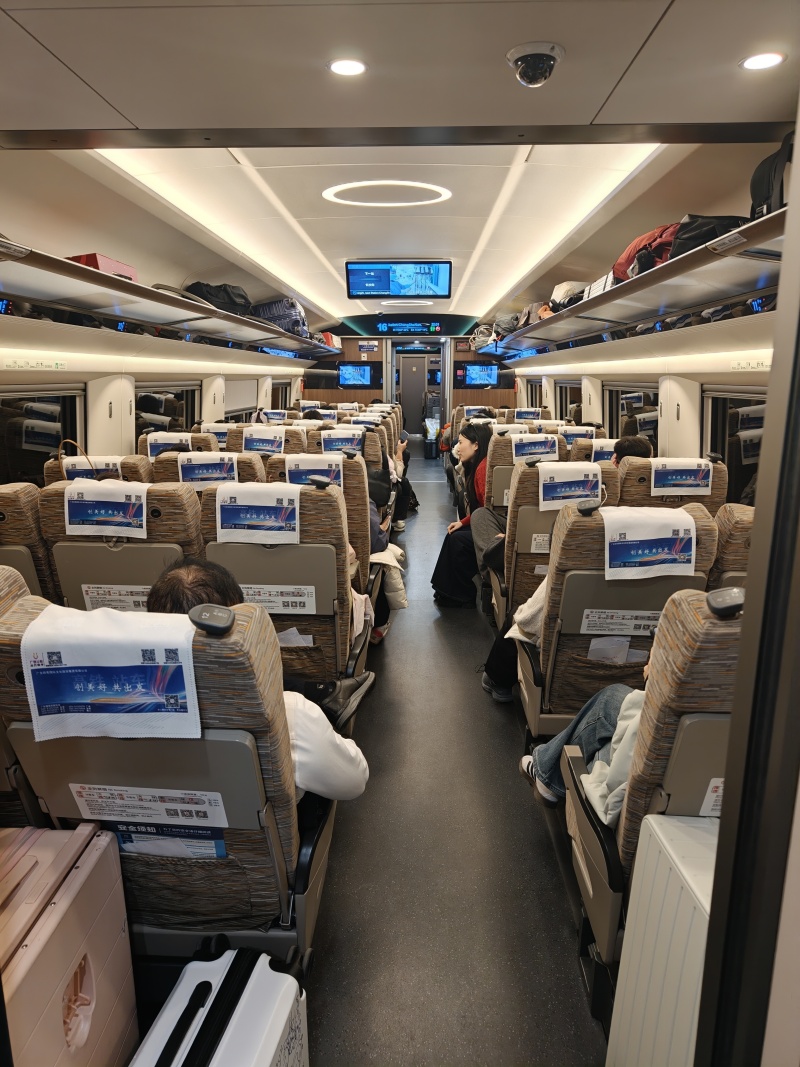
The train consists of 16 carriages. Coaches 1 and 16 have second-class and first-class seats. Coach 8 has a buffet car where you can buy ready meals. Coaches 2 to 15 (except 8) have 12 rooms with 4 beds.
The train is more than 400m long, so if you need a stretch, you can do quite a walk by going from one end to the other and back.
Comparison to flying
If you decide to fly, then you need to go to the airport, go through security (the main difference is that you can bring water and other stuff on trains, and you don’t need it on the other side).
We flew with Air China on a Boeing 737-800 for a 3-hour flight (they timed it for 3.5 hours), and it took a really funny route.
It takes off from Tianjin, then flies west for a while at low altitude, then turns south at normal altitude.
The flight was smooth and quiet (for someone who typically flies with Wizz Air or Ryanair, it was a strange but positive experience).
It is roughly 7 hours from the airport to the city and 13 hours from the city to the city, so almost twice as long.
Comparison to Calendonian Sleeper
Most people are overhyped about the speed of this train, but the speed doesn’t matter on a night train.
For me, what matters is a comfortable bed, a comfy pillow, and a duvet.
The bed on Fuxing is bigger and more comfortable. It also has a table and a kettle.
On the Calendonian Sleeper, you can book a solo-occupancy room with a shower and toilet, and they even have a double bed (which, from what I saw, is better than on Fuxing.
The food on the Caledonian sleeper is freshly made rather than ready-made.
Conclusion
Personally, I recommend travelling by train (day or night), as I think it is the best way to travel between Hong Kong and Mainland China.
Yes, you can fly in half the time, but domestic flights are usually delayed, and they can be badly delayed. Even on the day we took the aeroplane, it was before time, and the train was 15 minutes late.
With a night train, you save money on a hotel and get a great night’s sleep if you are comfortable sleeping with earplugs or headphones.
Daytime is better if this is your only train trip and you want to see the modern landscape of China.
 Dominik Symonowicz